
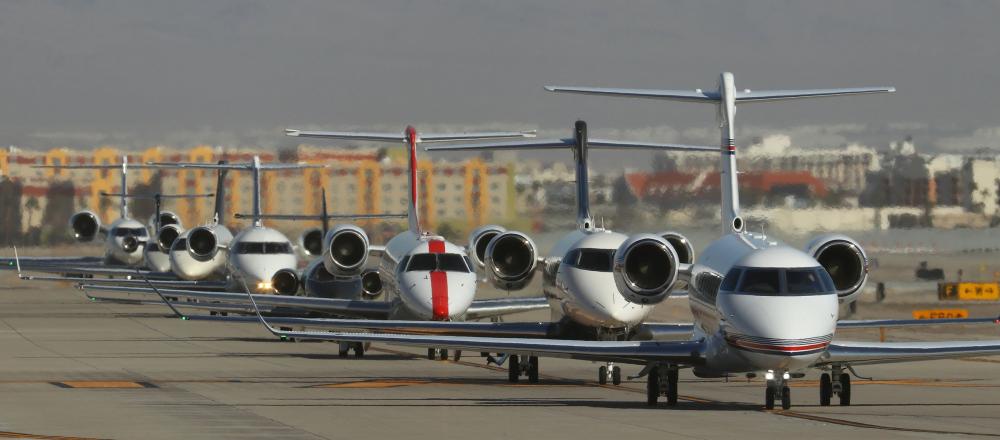
Featured Photo: Barry Ambrose
Friday, July 17, 2026
I was in Las Vegas last weekend for the NBA’s Summer League, and weekends like this are filled with athletes and coaches from all levels of basketball. What I didn’t know was that it was also a UFC fight weekend, with Max Holloway facing Conor McGregor. But I’m not here to write about athletes and their sports—because this is BuddWrites: Airspace, where I’ll instead write about the unseen logistics of how high-profile people and athletes travel to these events during high-traffic weekends.
For most, weekends like last week’s are marked by crowded baggage claims, flight delays, and hotels full at every level. Every part of the system stretches, and you feel it. But that pressure doesn’t hit every part of the travel ecosystem. Because during weekends like the Super Bowl, All-Star Weekend, or a fight night in Las Vegas, a second system ramps up in parallel—one designed to handle the heavy traffic without friction.
You may not see it just by spotting athletes or celebrities walking through casinos, eating at fancy restaurants, or getting out of those shiny black SUVs, but you can if you know where to look.
After wheels down at Harry Reid International, this was pretty much the view from my commercial coach window seat:
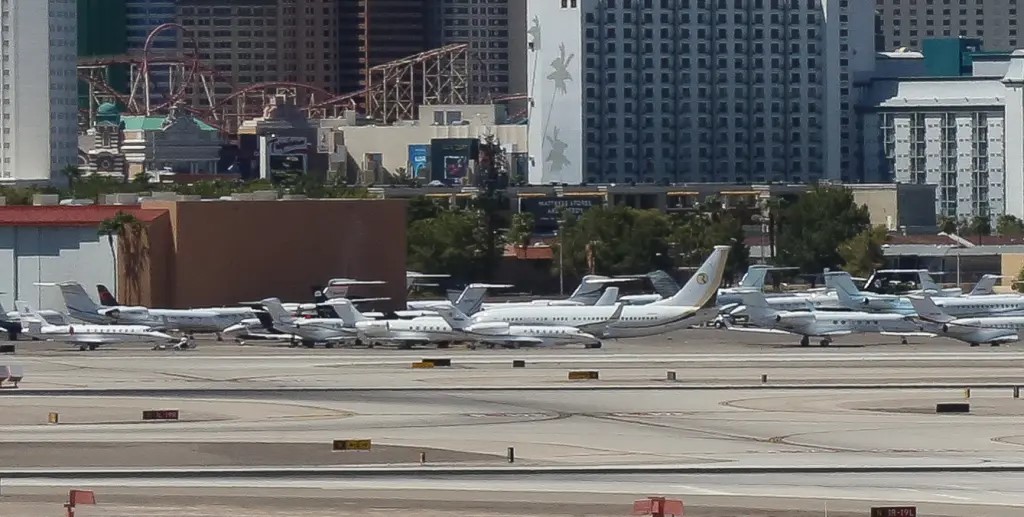
Additionally, at airports like Harry Reid, LAX, or Van Nuys Airport, the volume doesn’t drop on weekends like this. It gets redirected. And this is where Fixed Base Operators (FBOs) take over.
FBOs become the primary access points—not terminals or gates—but entryways into a different flow of movement. During high-profile events, they operate at a completely different tempo because they’re the ones organizing the private jets lined up across the tarmac. Ground crews take it from there, placing aircraft wingtip-to-wingtip by the foot, as they’re scheduled around temporary traffic patterns for a single weekend. And if Harry Ried’s tarmac was full, they were likely relocated to the Henderson Executive Airport to make room for more.
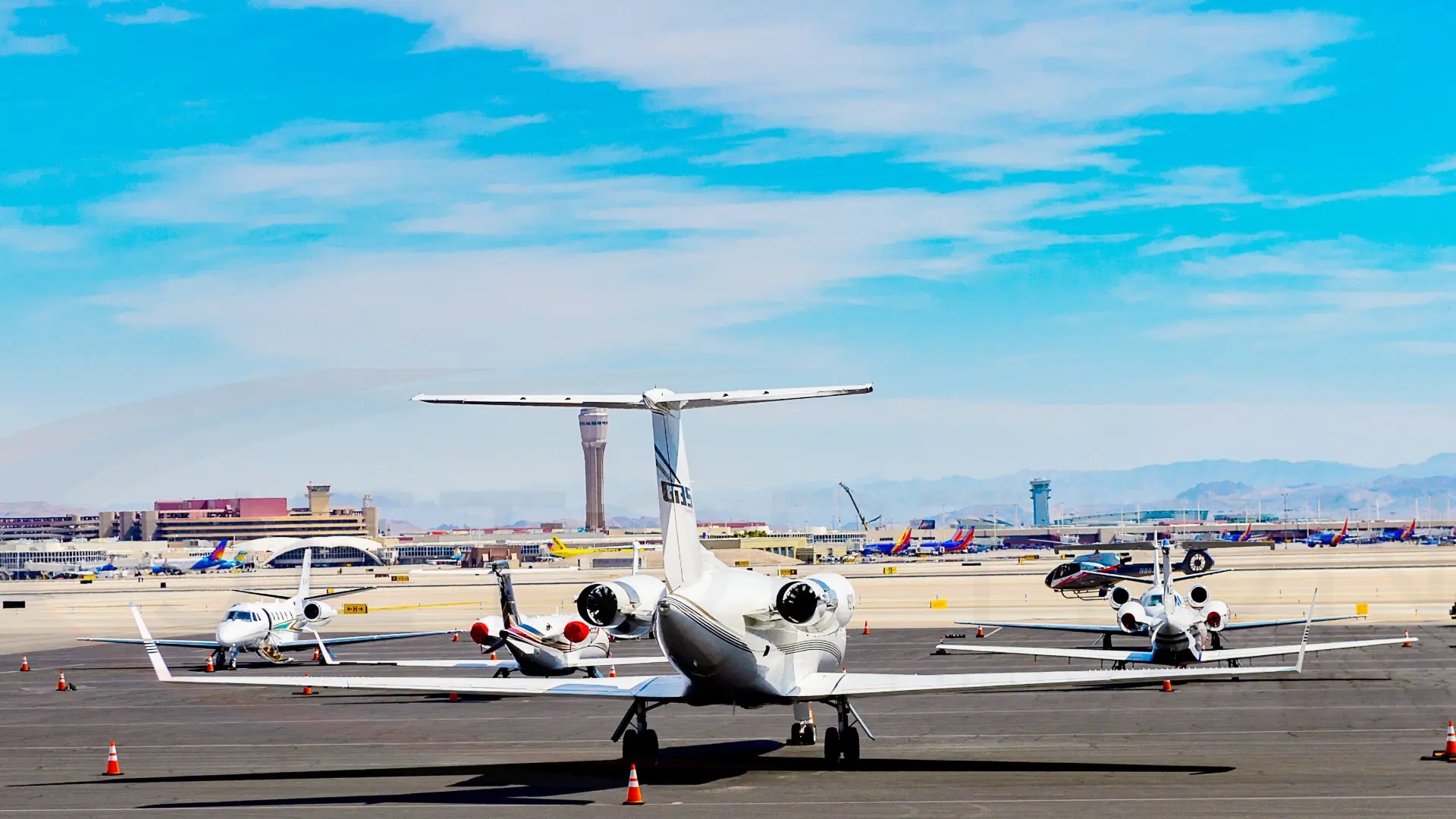
As drop-offs become immediate departures, aircraft unload passengers, refuel, and reposition. So the ramp isn’t for storage, but turnover. Fueling alone becomes a coordinated operation, as hundreds of aircraft require jet fuel within a short window. Delays aren’t measured in hours—they’re measured in minutes—a system compounded by every second.
But inside places like Atlantic Aviation, the experience is a quiet lounge, with minimal wait times and direct boarding. On the tarmac, it’s a constant calculation.
And then there’s the airspace…not BuddWrites, Airspace, but the airways where temporary flight restrictions (TFRs) are often put in place around stadiums or event zones. Schedule padding no longer exists as arrival slots are assigned, departure windows tighten, and aircraft stack in holding patterns, waiting for clearance in sequences that look like choreography rather than congestion.
From any passenger seat, none of this is visible because it’s designed to feel uninterrupted. But behind that experience is a system underload.
Aside from volume, the high density is what makes these weekends different—where a week’s worth of private aviation traffic is compressed into one weekend and sometimes hours.
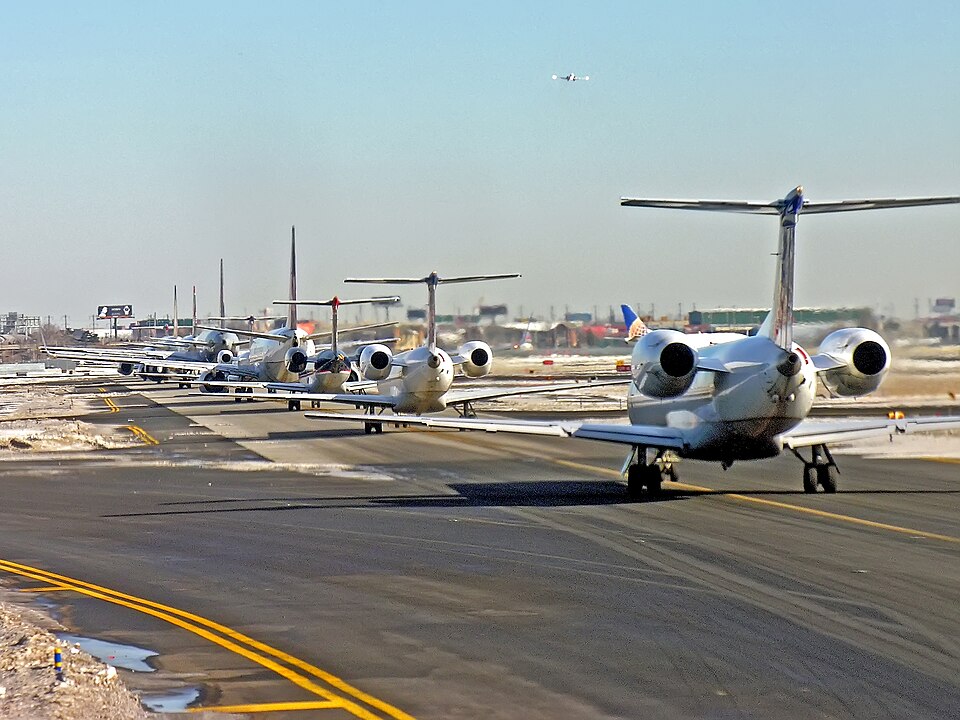
But the work of FBOs and surrounding airports absorbs demand that the primary system can’t carry without slowing down. They don’t eliminate congestion; instead, they reorganize it. They distribute movement across space, time, and airports that most passengers never reach.
And maybe that’s the part most people never see. The real luxury isn’t the aircraft, the lounge, or the black SUV waiting outside. It’s the absence of commotion, interruption and travel anxiety—the feeling that, even when the rest of the city is under pressure, their movement never has to be.
-TK


