
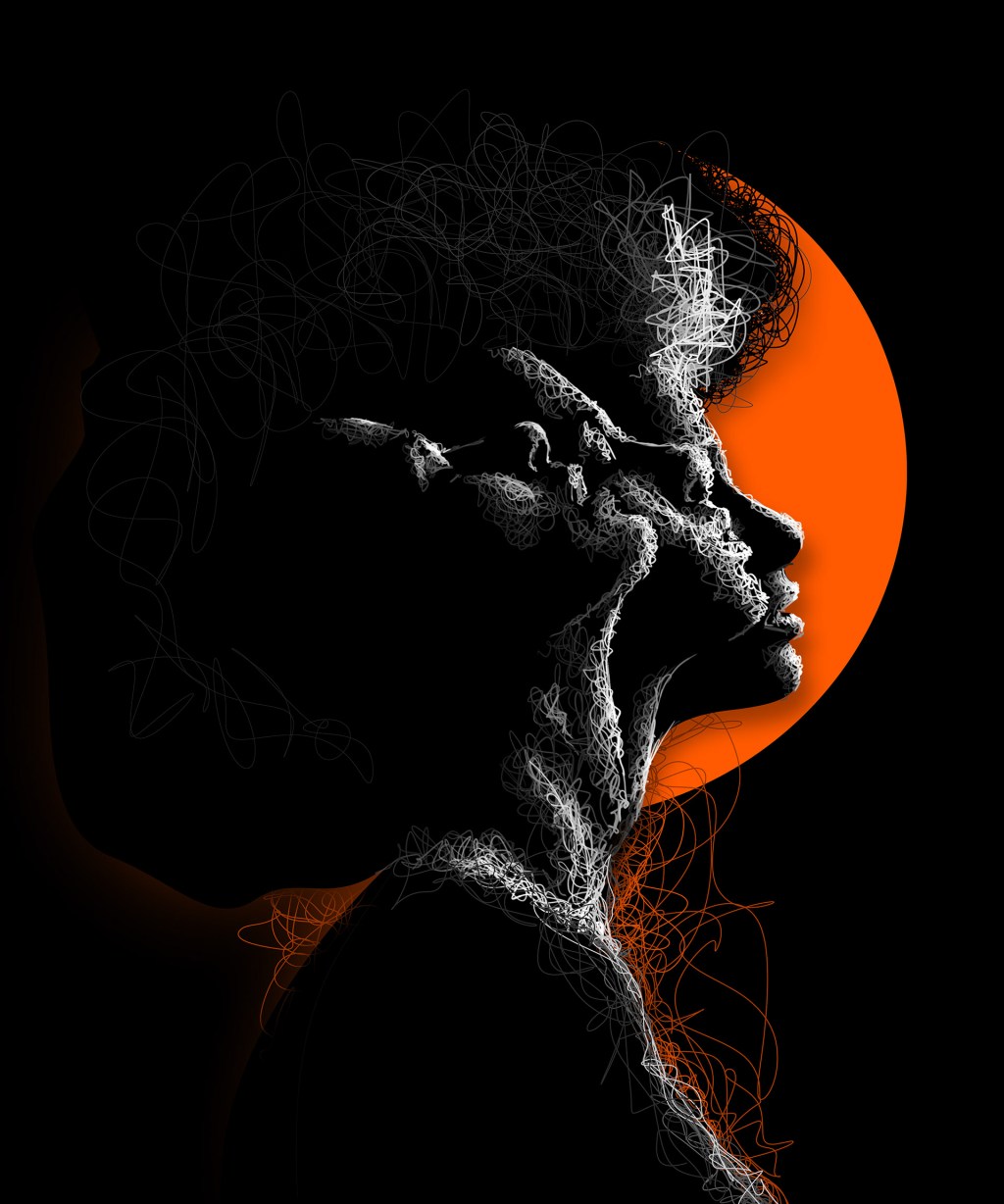
Featured Artwork by Peter Kamale
Monday, November 11, 2024
I cringe at the identity politics often praised by politicians through their campaign runs. It’s one of nine reasons I avoid writing about political matters because the voting demographics are far too ambiguous every election. When exit polls show significant changes in group voting, it goes from a subjective assumption about the outcome to an explanation of how someone won and why the others lost.
Watching ghosts be over-analyzed in the most confident manner is so American but also a symptom of human nature. However, the panelists who can find the humility to admit their ignorance probably are more appealing to voting spectators like me, who often don’t care until the candidate is close to home.
This doesn’t mean I voted based on someone’s skin color, demographic, or political association—but possibly an emotional affiliation.
Wednesday, November 5th, 2008, news stations nationwide broadcasted tens of thousands of Black Americans celebrating in the streets. Through the prior night of anticipation and excitement, we all watched the electoral ticker rise as polls closed and votes were counted state by state. By midnight, it was clear that the next United States President would be Barrack Hussein Obama, an African American.
That Wednesday morning, I was a sophomore at the University of Oregon—walking the campus with my head to the sun and an incredible stride of black boy joy while welcoming the ‘glory days.’ My first class was a 200-level speech and communications course at Straub Hall, mainly comprised of Caucasian students. Our professor was late that morning, and whenever this happened, we’d contemplate leaving because we were allowed to if the professor hadn’t arrived after five minutes without notice.
A couple of minutes into class, clusters of conversations began to spark among students. Some spoke about our football team because they had just lost to Cal that Saturday. And considering our cell phones were only starting to learn the powers that would be, most students were shooting the shit because there wasn’t anything else to do.
Being one of two black males in this lecture hall who often walked in with our headphones in and iPods playing at ‘def by 30’, we felt the discernment to stay past the six-minute mark. I recall waiting after watching bro’ engage in one of these conversations amongst six other white kids. The moment I noticed him passionately explaining something, I pulled out my headphones and heard him finish saying, “…we are not the minorities anymore.”
Wednesday, November 9th, 2016, I left my apartment and walked to the bus stop, inhaling a new mist of air—if that’s what we’re calling it. I remember waiting at the bus stop and having embodied some concern for an eternal cold front, which felt something to the tune of despair and fear. Or like a forever winter was on the horizon.
Whatever it was, I felt empty.
I boarded the number 17 bus, looking straight to the floor because it was just eight years ago, on a morning like this, when I was the one walking with joy and my head to the sun. And knowing what I know now, I’d never be able to tell who the proud ones on that bus were.
I walked into a downtown Portland office wearing the ignorance of who would be carrying the joy this time. And who’s walking the proud stride of their people?
Fast forward to when President Biden was elected in 2020, it felt as though things would go back to normal because, from an outside political standpoint, everything seemed extreme after 2016. But honestly, considering I don’t watch trash TV, I didn’t mind it because I get it; President Trump was a breath of fresh—something—for democracy—and I just had to learn to laugh.
Wednesday, November 6th, 2024, I woke up around 2:00 AM, praying for a miracle in the numbers. Throughout the past few weeks, I envisioned this morning being a celebration for my sisters, sisters of color, nieces, cousins, aunts, and people of change—who would all be walking in joy with their heads to the sun like me on campus in 2008.
I thought I’d relive the black boy joy through the aspiring voices and eyes of black women, women of color, and the people who voted for change. I thought maybe this country would love to watch long dark hair, brown skin, and dark eyes during our next four years of State of The Unions.
But if I had to be honest, my doubts weighed heavily about this election. I won’t share those reasons because I’m a poet, creative writer, and rogue author—who most would assume that I only date white women. So, you might be surprised at this politically related post because I’ve never shared my political opinions or stance.
Wednesday morning, it felt like some of us were watching a struggling single mother take back her abusive husband.…and we cringed as she hugged him tight and close—yet gracefully with her left calf lifted back, stretching her heels over his luggage as he was joyfully ready to move back in where her stepchildren will pay through their anxiety and fear.
But respectfully, it’s loud and clear who Americans want. As a law-abiding citizen who understands the privilege of living here, I believe that the success of that administration is the success of this country—regardless of any identity politics, which brings me back to my college days.
“We are not the minorities anymore…” Although a statement I heard out of context, it’s a statement I’ve thought about since that morning of pride, joy, and relief. A statement reminding me that minorities are something of a star glowing out of darkness—but with something on the horizon.
I watched part of Vice President Kamala Harris’s concession speech, in which she also talked about stars shining out of darkness. But now that the morning has arrived and the sun is shining, can we talk about the many minorities walking just as proudly as the majority—and under a sun that some Americans feared would rise again?
And pardon me for reminiscing about the glory days when I watched a couple, kin to my skin, represent us in the White House. It was times like this when some of us felt a break, forgetting we’re minorities. It was times like this when we felt worthy to be part of conversations where, otherwise, we’d sit back and listen.
But these conversations are also where they get tired of hearing from us—and eventually, our words are left echoing through chambers of gaslit rhetoric. We’re left looking to the floor in angst, wishing there was more we could’ve done, more we should’ve said, and what we would’ve done differently.
Through the many echo chambers I’m part of, I watched some women shed tears this past week. And for someone who’s often left scrambling for words as if I should fix something, I’m reminded of how empty I felt on the morning of November 9th, 2016.
Which I reckon isn’t comparable.
What is comparable is our empty chambers—our open wounds. So, I suggest we keep to the sunshine because this is where, our light is better focused.
-Terrell JPK (Budd)